
As California faces growing industrial development and mounting pressure on its water supplies, Proposition 45 could reduce environmental oversight when communities need it most.
October 26, 2026
Credit: Vadim Startsev
For more than 50 years, California's environmental laws have helped protect communities from pollution and given residents a voice in decisions affecting their health and environment.
As industrial development expands across the state, recent emergencies at GKN Aerospace in Garden Grove and the Lineage warehouse in Boyle Heights have shown how quickly industrial risks can become public crises. At the same time, Greater Los Angeles is investing billions in water infrastructure to clean up past pollution and secure its water future.
This November, Californians will vote on Proposition 45, which would shorten public comment periods, limit consideration of less harmful alternatives, and restrict courts' ability to intervene when environmental reviews fall short. These changes could undermine efforts to protect local water supplies and leave communities bearing the environmental and financial costs of harmful development.
When Industrial Projects Go Wrong, Communities Pay the Price
Recent industrial disasters in Southern California have demonstrated the serious risks these facilities can pose to surrounding communities, from threats to public health and safety to costly emergency responses and cleanup efforts that can leave taxpayers footing the bill.
In June 2026, a massive fire at the Lineage cold-storage warehouse in Boyle Heights burned for eight days, sending smoke across surrounding neighborhoods. According to the Los Angeles Times, emergency room visits related to smoke inhalation increased during the fire. The Los Angeles Fire Department incurred more than $5 million in response costs.
Just weeks earlier, a chemical tank emergency at GKN Aerospace in Garden Grove forced approximately 50,000 residents to evacuate, disrupting families and businesses, some for nearly a week.
The costs of industrial pollution can also persist for decades. For years, Exide Technologies' battery recycling facility in Vernon contaminated thousands of nearby properties with toxic lead and polluted the groundwater beneath the site with trichloroethylene (TCE), a cancer-causing solvent. After the facility closed and the company declared bankruptcy, California committed hundreds of millions of dollars in public funding to clean up contaminated homes, yards, and other properties. (California Department of Toxic Substances Control)
The nonpartisan Legislative Analyst's Office estimates that implementing Proposition 45 could initially cost state and local governments more than $100 million annually. While faster approvals could save developers money, the measure could also leave taxpayers facing higher costs from environmental damage. Are its promised benefits worth the risks to communities and taxpayers?
Data center locations across the U.S.
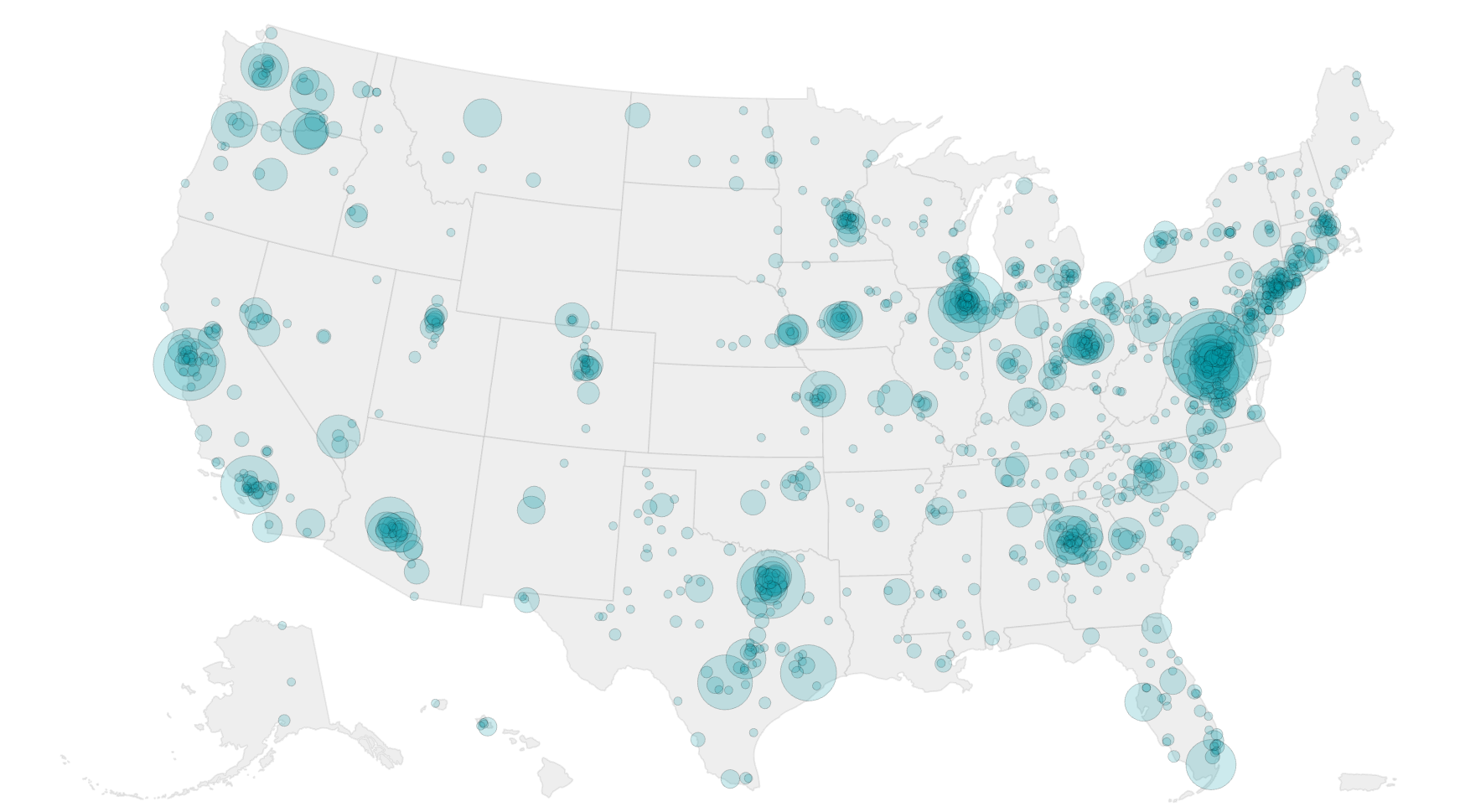
Note: Includes data centers that are operational, planned, land-banked, or under construction. Data as of 1/22/2026. Photo Credit: World Resources Institute
Data Centers Are Expanding as California Faces an Uncertain Water Future
The stakes are especially high as California faces a new wave of data center development.
Data centers power everything from email and streaming services to artificial intelligence. As demand for AI and cloud computing grows, companies are building increasingly large facilities to house the servers, cooling equipment, and backup power systems that keep these technologies running. California is already one of the nation's largest data center markets, with billions of dollars in speculative investment flowing into the industry. (World Resources Institute)
These facilities can place significant demands on local water supplies. Some large facilities may use as much as 5 million gallons per day, roughly the same as a town of 50,000 people. And that’s only the water used onsite. Generating the electricity data centers run on takes far more. A 2024 Lawrence Berkeley National Laboratory report found that U.S. data centers directly consumed about 17 billion gallons of water in 2023, while generating their electricity consumed about 211 billion gallons, more than 12 times their direct water use. The report projects that direct use alone could double or even quadruple by 2028.
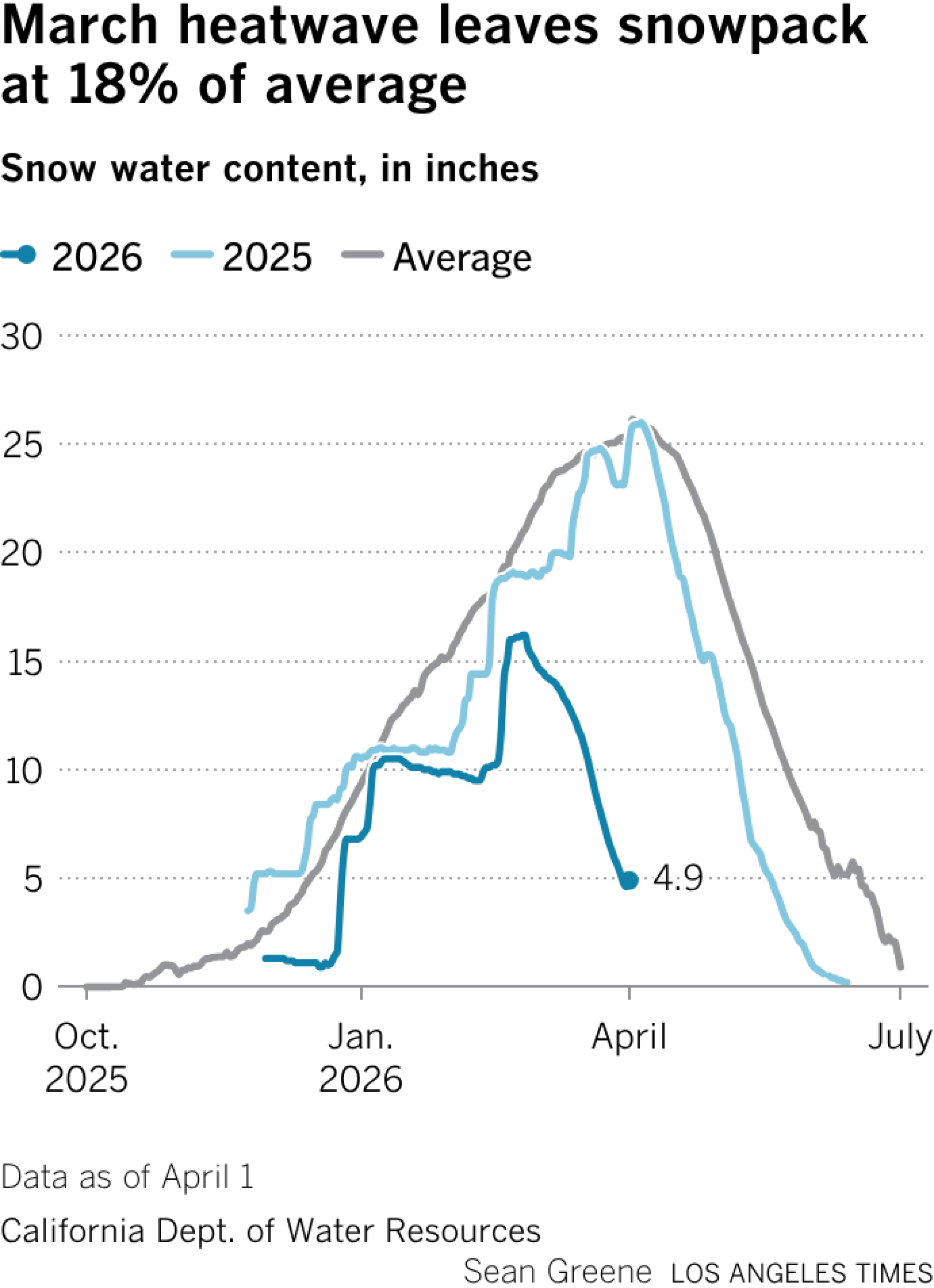
Photo Credit: LA Times
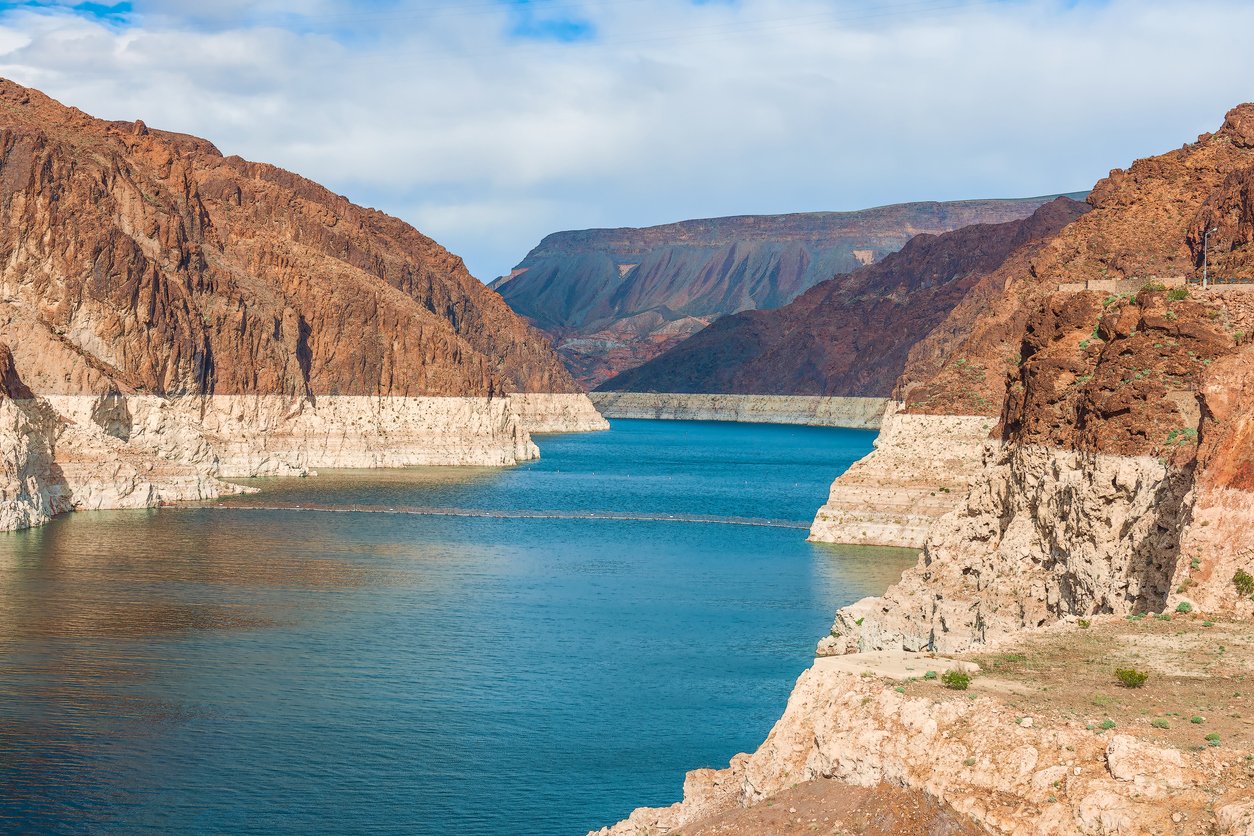
California's water supplies are already becoming harder to predict. In April 2026, the state's snowpack fell to just 18% of its historical average following record-breaking March heat. Meanwhile, Lake Powell and Lake Mead, which store Colorado River water relied upon by Southern California, remain historically depleted. Although California's reservoirs are currently relatively well supplied and a strong El Niño could bring a wetter winter, long-term water availability remains uncertain. (California Department of Water Resources; U.S. Bureau of Reclamation)
Water scarcity is already a concern in many places where data centers operate. A September 2026 study published in Environmental Science & Technology found that one-quarter of data centers worldwide are located in areas experiencing water shortages during at least part of the year, a share projected to rise to one-third under a warmer climate scenario. A 2026 report from Ceres also found that two-thirds of water-using power plants in the seven states it analyzed face medium-high to extremely high water stress. Yet data center water consumption remains difficult to track. A 2026 UC Berkeley Law report identified significant gaps in California's water-use data and regulatory framework, while a CalMatters investigation found that publicly available information is too limited for independent experts to verify industry claims about AI's water consumption.
Data centers also pose potential pollution risks. Some cooling systems reduce onsite water use by relying on PFAS, trading one water problem for another. Removing PFAS from drinking water and wastewater requires costly treatment, often passed on to residents through higher water and sewer bills. In Wyoming, officials detected a potentially hazardous bacterium in wastewater discharged by a contractor building a Meta data center, prompting restrictions on further discharges (Mother Jones). For communities already burdened by industrial pollution, these risks raise concerns about cumulative environmental impacts.
The Interests Behind Proposition 45
Proposition 45's supporters insist the measure does not apply to data centers, but legal experts dispute that claim. In a September 2026 Daily Journal analysis, environmental law experts Richard Frank and Matthew McKerley argue that its broad definition of broadband infrastructure could allow data centers to qualify for expedited environmental review. The measure explicitly excludes oil and gas facilities, prisons, and other projects, but contains no similar exclusion for data centers.
The omission is especially notable given the measure's financial backing. According to Capital & Main, companies with data center projects in development have contributed to Proposition 45, including Prologis ($500,000), PG&E ($2.3 million), and California Resources Corporation ($1 million). Google co-founder Sergey Brin is also among the donors to a $10 million committee supporting the measure.
For a measure that supposedly has nothing to do with data centers, Proposition 45 has attracted significant support from companies developing them.
Why Environmental Review Matters
Whatever its implications for data centers, Proposition 45 would change one of California's most important environmental safeguards: the California Environmental Quality Act (CEQA). As the state's official ballot summary states, the measure would “expedite environmental review for specified project categories,” including housing, transportation, water, internet access, and clean energy projects.
For decades, CEQA has given communities a voice in decisions affecting their health and environment, requiring agencies to assess environmental impacts and address public concerns before projects move forward. This process also improves projects by incorporating community input, building public support, and helping avoid costly conflicts down the road.
In 2020, LA Waterkeeper sued the West Basin Municipal Water District under CEQA over its proposed $500 million ocean desalination plant in El Segundo, an expensive, energy-intensive, and environmentally damaging approach to developing local water supplies. We challenged the project's failure to adequately consider cheaper, less harmful alternatives and assess climate and environmental justice impacts, including potential rate increases for low-income customers. In December 2021, the board voted 3–2 to abandon the project in favor of more sustainable options, building on its longstanding investments in wastewater recycling. Under Proposition 45, the review would have been limited to a single alternative selected by the developer.
More recently, LA Waterkeeper joined the Riverpark Coalition in challenging the approval of Pacific Place, a proposed self-storage facility along the LA River in Long Beach. The groups raised concerns about impacts on the river and surrounding community, including lost opportunities for green space and flood protection. In June 2026, the lawsuit resulted in a settlement securing expanded green buffers, a public trail easement, and support for future public open space along the river.
CEQA is not perfect. Environmental review can be lengthy and costly, and the law has sometimes been exploited to delay or block much-needed affordable housing. But reform should address these shortcomings without weakening community protections. Residents must retain the ability to identify environmental harms, demand less damaging alternatives, and shape the projects that affect them.
Federal Attacks Put California's Environmental Protections at Greater Risk
Proposition 45 also comes at a time when federal environmental protections are being rolled back under the Trump administration, putting additional pressure on safeguards that California communities have relied on for decades.
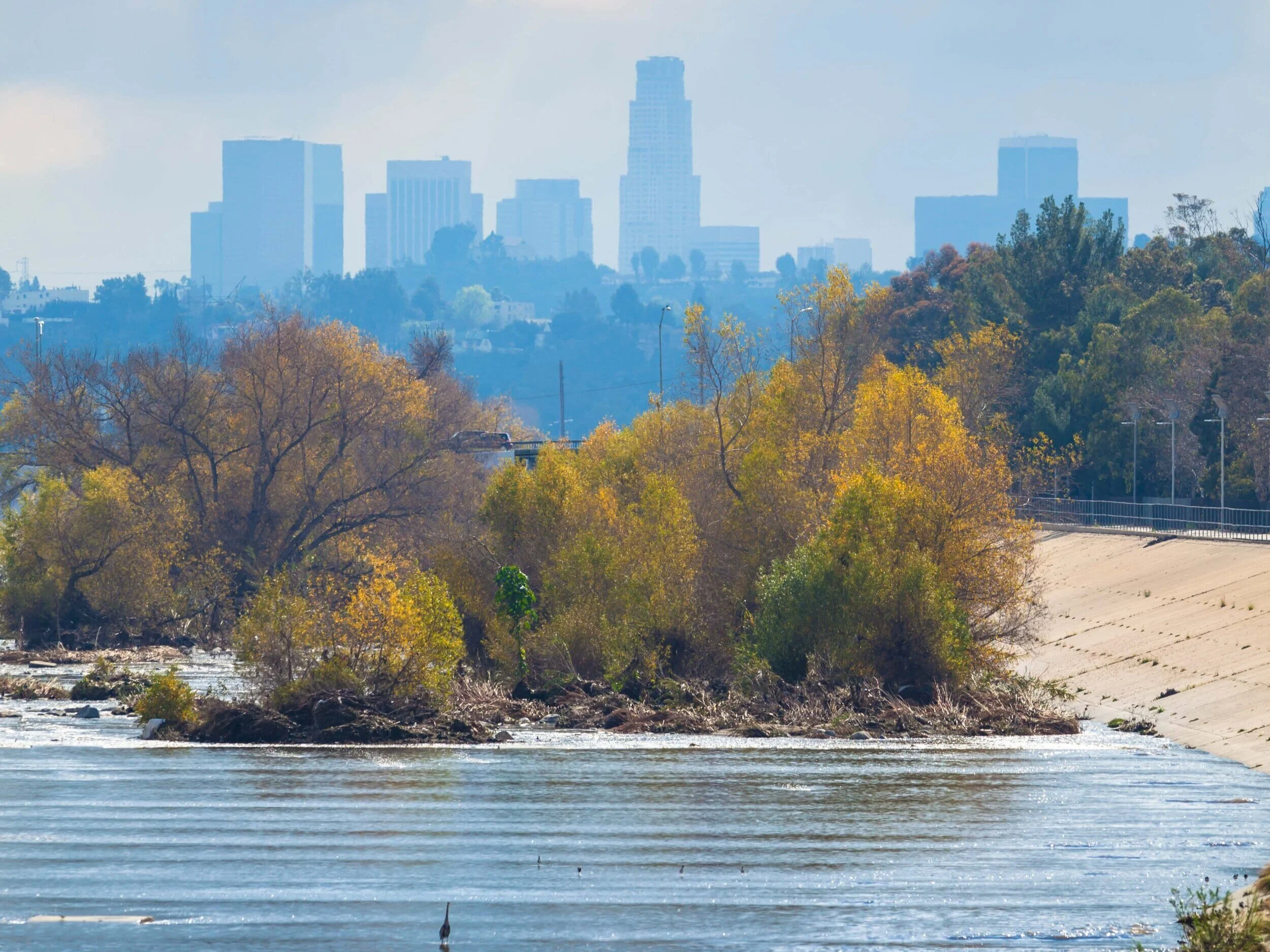
The Trump administration's EPA has moved to narrow which streams and wetlands receive protection under the Clean Water Act. Building on a 2023 Supreme Court decision that significantly limited federal jurisdiction over waterways, the administration's proposed rules could leave additional streams and wetlands vulnerable to pollution.
In response, California Coastkeeper Alliance has helped lead efforts to defend the state's waterways from these federal rollbacks. Alongside Defenders of Wildlife and Senator Ben Allen, the Alliance championed SB 601, the Right to Clean Water Act, which sought to restore protections for streams and wetlands losing federal safeguards. Despite sustained advocacy from Coastkeeper organizations and environmental allies, the bill stalled in the Legislature in August 2026, leaving important gaps in water protections unresolved.
As federal environmental protections weaken and efforts to restore them stall in Sacramento, California communities risk losing safeguards on both fronts. Proposition 45 could compound those losses, leaving residents with fewer tools to protect their waterways, health, and neighborhoods from harmful development.
California's Environmental Future Is on the Ballot
Artificial intelligence and emerging technologies offer enormous potential. But realizing that potential shouldn't come at the expense of clean water, public health, or communities' right to shape their future. California can embrace innovation while ensuring that development serves the public good, not just private interests.
Proposition 45 takes a sweeping approach to a complex problem, weakening environmental review without guaranteeing the benefits its supporters promise.
Los Angeles Waterkeeper urges Californians to vote NO on Proposition 45 this November.
Disclaimer: LA Waterkeeper's position on this ballot measures reflects our commitment to clean water, healthier communities, and a sustainable future for all Angelenos. As a 501(c)(3) nonprofit organization, LA Waterkeeper does not endorse political candidates. Paid for by LA Waterkeeper.