
Five Industrial Emergencies, One Warning: How Toxic Industry Is Threatening LA's Water Future
Industrial risk is no longer limited to the smokestacks, pipes, and visible discharges our laws were built to regulate. It is increasingly cumulative, regional, and hard to detect. The five emergencies that recently struck the Los Angeles area should be a wake-up call — and an opportunity to fix the systems failing to protect us, before it’s too late.
June 25, 2026
Kelly Shannon McNeill, Managing Director of LA Waterkeeper
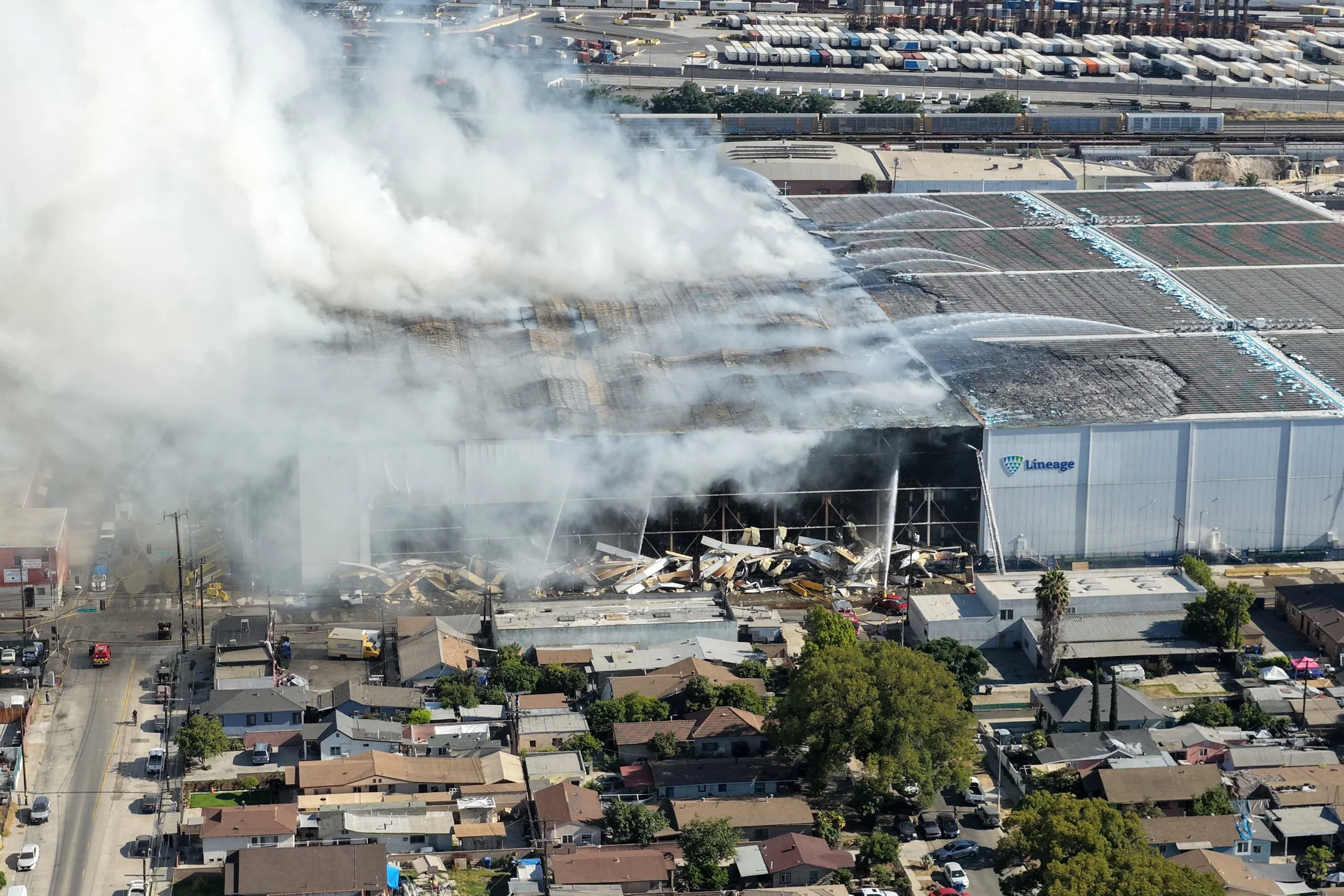
Photo Credit: Associated Press
A toxic chemical tank on the verge of explosion in Garden Grove. A crude oil pipeline rupture contaminating the LA River in East LA. A major industrial fire in South Gate blanketing southeast LA in toxic smoke. A wildfire encroaching on the Santa Susana Field Laboratory, one of the most contaminated sites in American history. And just last week, a warehouse fire in Boyle Heights that sent toxic smoke across most of Los Angeles for days, prompted Governor Newsom to declare a state of emergency, and forced LAUSD to relocate students from nearby schools.
Over the last month, five industrial emergencies across Greater Los Angeles exposed how unprepared our regulatory system is for the speed, scale, and complexity of modern-day industrial pollution.
Industrial risk is no longer limited to the smokestacks, pipes, and visible discharges our laws were designed to regulate. It is increasingly cumulative, regional, and difficult to detect. Yet our oversight systems still treat pollution as if it can effectively be managed facility by facility, permit by permit, emergency by emergency.
That failure continues to fall hardest on frontline communities, where toxic industry has been concentrated for generations. But the consequences do not stop there.
If we are serious about protecting public health, environmental justice, and regional water security, we should see these emergencies for what they are: our modern-day Cuyahoga moment. Like the 1969 river fire that helped force the nation to confront industrial water pollution and pass the Clean Water Act, this is a warning that our laws and oversight systems need to be overhauled before the next disaster makes it clear it’s too late.
How We Got Here: Redlining and the Geography of Risk
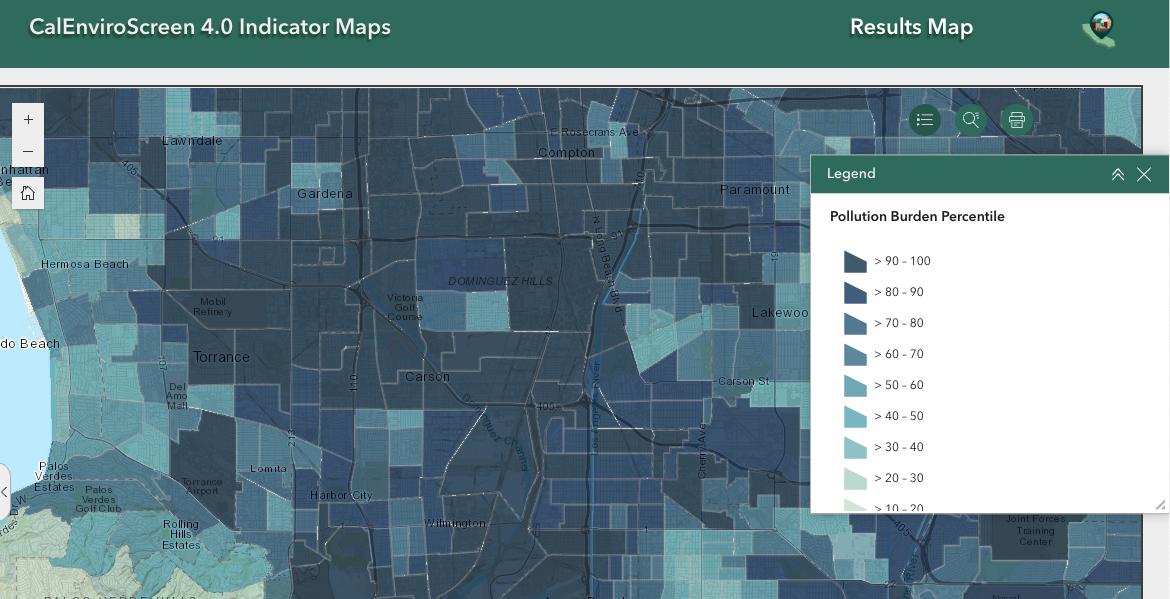
The consequences of our failure to regulate industrial pollution have never been evenly distributed. The communities absorbing these emergencies already face disproportionate environmental burdens -- the legacy of redlining and decades of political decisions that prioritized economic convenience over public health.
The same federal maps that denied mortgages to Black and Latino communities in the 1930s and 40s made those neighborhoods targets for industrial facilities: cheap to site, easy to permit, politically unprotected. The Lineage warehouse fire in Boyle Heights is also a direct consequence of redlining. But when pollution is concentrated in communities with the least power to push back, eventually the consequences spread to everyone,
Today, CalEnviroScreen shows that 89% of people living in California’s most pollution-burdened census tracts are people of color. And as rising housing costs push lower-income families further from urban cores, more people are being funneled into these corridors — areas historically “affordable” precisely because of their pollution burden. The same logic that concentrated toxic risk in these communities in the 20th century is now driving the rapid buildout of AI data centers and battery energy storage systems in the same corridors in the 21st.
What makes this next wave even more dangerous is that the environmental risk looks different and can even be invisible. The servers, cooling systems, and fire suppressants that keep data centers running generate PFAS forever chemicals — chemicals that enter groundwater and don’t leave. Unlike a pipeline rupture, there is no explosion, no visible spill, no shelter-in-place order. You won’t know the aquifer is being contaminated until it already is.
Los Angeles and the San Gabriel Valley are currently spending billions to clean up groundwater contamination left behind by the last generation of industrial development — cleanup that is still not finished. Now we are proposing to add new contamination sources, with less environmental review than ever, over the same aquifers we are still paying to remediate.
The Regulatory Failure: Three Layers, One Outcome
The hard truth is that these failures are systemic: the result of outdated laws, overwhelmed agencies, and political decisions that have allowed industry to expand faster than our protections can respond. Communities are left to absorb the risk while environmental review is weakened, oversight remains fragmented, and federal safeguards are stripped away.
First, the legal framework has not kept pace with industrial change. Our environmental laws were written in 1970 for smokestacks you could see — not for PFAS accumulating invisibly in groundwater, battery systems capable of thermal runaway, or data centers quietly contaminating water supplies. Each wave of industrial change has outpaced the rules meant to govern it.
Second, enforcement is fragmented and under-resourced. DTSC — the state agency responsible for overseeing hazardous facilities like the one in Garden Grove — inspects facilities once a year at best, sometimes not at all, and often gives advance notice. Seven hazardous waste facilities in California are operating on permits that expired over a decade ago. Accurate data on emissions and violations requires navigating fragmented databases across DTSC, AQMD, regional water boards, and Cal/OSHA simultaneously — a complexity that functionally protects industry by making accountability nearly impossible for communities with limited resources.
Third, state and federal policy is increasingly prioritizing faster industrial development over stronger environmental review. Last year, Governor Newsom signed sweeping CEQA exemptions for advanced manufacturing — broad enough to arguably cover the facility that forced the evacuation of 50,000 Orange County residents. Battery storage and certain data centers can qualify as 'advanced manufacturing' under SB 131, exempting them from CEQA's environmental review and public disclosure requirements — the tools communities depend on to understand what's being built next to them and to demand mitigation. At the federal level, NEPA regulations have been rescinded, Clean Water Act protections have been stripped from many of California’s waterways by the Sackett decision, and EPA is being systematically defunded.
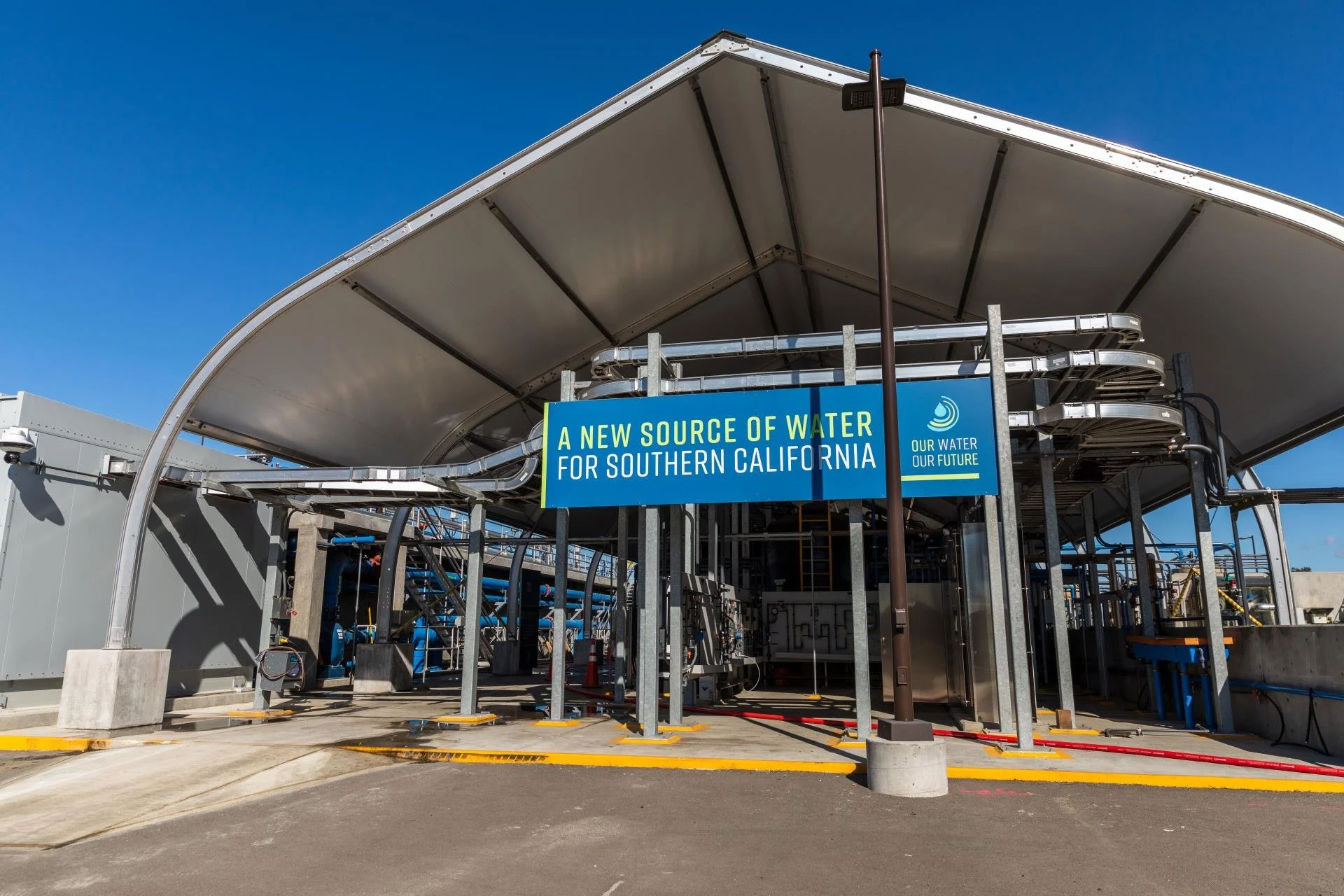
Photo Credit: Los Angeles County Sanitation District
What’s at Stake: Our Water Future Belongs to All of Us
Industrial contamination doesn’t care about zip codes or zoning. It travels through storm drains into our rivers and the ocean, and percolates into the groundwater basins we’re spending billions to clean up. Los Angeles has committed $6 billion to Pure Water Los Angeles — designed to produce clean drinking water for more than 500,000 households annually by 2035, with a full regional buildout projected at $21 billion over the next three decades. Every industrial contamination event in these corridors is a direct threat to that investment and the water security it promises for all of us.
Data centers compound the threat through consumption as well as contamination. A single hyperscale facility can consume one to five million gallons of water per day for cooling. In a region investing billions to reduce dependence on imported water, that demand is a direct conflict with our water independence goals.
And the contamination reaches an ocean already at the brink. Industrial and urban runoff drives the nutrient pollution behind harmful algal blooms — events producing toxins that kill marine mammals, close beaches, contaminate shellfish, and sicken people. During summer months in Southern California, up to 60% of the water column can become uninhabitable for marine organisms. California’s ocean economy generates more than $44 billion annually. Industrial contamination arriving at our coast could push this critical ecosystem over the edge – and there will be no going back.
Pollution doesn’t stop at the edge of these sacrifice zones. If you want the water future we’ve spent billions to create, you have a stake in what happens in every industrialized community in this region.
What We Need: A Policy Agenda for the 21st Century
The answer starts with Governor Newsom signing SB 601, the Right to Clean Water Act. The Sackett decision and federal rollbacks have stripped Clean Water Act protections from more than 90% of California’s streams and 96% of its wetlands. SB 601 would restore those protections at the state level — and critically, restore the right of communities and organizations like LA Waterkeeper to take polluters to court when those protections are violated. Without that citizen suit provision, a pipeline company that spills crude oil into the LA River faces state-only fines capped at $5,000 per day versus $10,000 per day under federal law. That math shapes corporate risk calculations.
We also must fix the CEQA advanced manufacturing exemption. SB 954 must pass and be meaningful. A definition broad enough to cover facilities that triggered a 50,000-person evacuation is not environmental protection. Sixty-four percent of Californians oppose the current exemption. The legislature should listen.
Close the industrial zoning loophole for data centers and BESS. A 400-megawatt battery storage facility adjacent to a residential community should not escape environmental review because the land is zoned industrial. SB 887, which would prohibit categorical CEQA exemptions for data center projects, is a necessary step.
Fund and reform DTSC. Meaningful inspection frequency, real penalties for non-compliance, and advance notice bans are the minimum required for the agency to do its job. An agency overseeing facilities storing some of the most dangerous chemicals in the state cannot operate with a 75% decline in permitted management facilities.
Protect cumulative impact review. Any new industrial development in overburdened communities must be evaluated against what is already there — and the communities that live there must have a genuine voice in that evaluation.
There is one more threat Californians should understand. The California Chamber of Commerce has submitted nearly one million signatures to qualify the “Building an Affordable California” initiative for the November 2026 ballot — a measure that would give developers and polluting industries the power to decide what to build where, stripping communities of the environmental review and legal recourse that stand between them and the next Garden Grove. If it passes, communities seeking to challenge projects that threaten their health and water will have fewer options and a higher bar to clear. The emergencies of May- June 2026 are exactly the argument for why that would be a dangerous mistake.
The tank in Garden Grove has been stabilized. The oil crews have left East LA. The Sandy Fire is contained. The Boyle Heights warehouse fire is finally contained, but the smoke still blanketing Los Angeles is a bitter reminder that these emergencies don't stay contained to the communities where they start. The conditions that produced all of them remain, and are in many respects getting worse. The billions we are investing in our water future depend on getting this right. So do the communities that have been absorbing industrial risk, without adequate protection, for generations.